Wedding floristry case study Barkingside church before and after
Posted on 23/10/2026
If you are looking at a Wedding floristry case study Barkingside church before and after, you are probably trying to answer a very practical question: what does the space actually look like once the flowers are in, and is the change worth it? Fair question. Churches can be beautiful already, but they also come with their own quirks-high ceilings, dark corners, narrow aisles, strict layout rules, and that slightly awkward moment when you realise the first pew is closer than you thought.
In this guide, we break down how a Barkingside church wedding floral setup can transform a ceremony space from plain to polished, what decisions matter most, and how to plan the design so it feels elegant rather than overdone. You will also find a step-by-step process, practical checklists, common mistakes, and a real-world style example that shows how the before-and-after effect works in practice.
Whether you are the couple, a planner, a family member helping with the logistics, or simply comparing ideas for a local church wedding, this article is written to help you make clearer decisions. No fluff. Just the details that make a ceremony feel right.
Why Wedding floristry case study Barkingside church before and after Matters
A before-and-after floristry case study is useful because it makes the value of the design visible. Photos are one thing; understanding the logic behind the design is another. In a church setting, the floral plan is not just about decoration. It is about shaping the atmosphere as guests walk in, look towards the altar, sit through the ceremony, and then leave with a memory that feels complete.
That matters even more in Barkingside, where many weddings are planned with a mix of local convenience, family expectations, and quite a bit of time pressure. People want the ceremony to feel special, but they also want it to be practical, respectful, and cost-aware. Truth be told, that balance is where good wedding floristry earns its keep.
Before-and-after planning also helps couples avoid one of the most common frustrations: flowers that look lovely in isolation but disappear inside the venue. A bouquet can be gorgeous, but if the church aisle is long and the lighting is dim, the design needs more structure. Likewise, a large pedestal arrangement may be beautiful in a photo but wrong if it blocks sightlines or crowds the entrance.
So the real value of a case study is not just the visual change. It is the thinking behind it. What was the church like before? What did the flowers need to solve? And what should you do if your own venue has similar constraints? Those are the questions that make this topic genuinely useful.
How Wedding floristry case study Barkingside church before and after Works
At its simplest, a church floristry transformation works by layering design elements around the ceremony space so the room feels intentional from the moment people arrive. The florist usually starts by assessing the venue, the couple's style, the budget, and the practical rules of the church. Then the floral plan is built around those conditions rather than forcing a generic look into the space.
A strong before-and-after result usually combines several design layers:
- Entrance impact - welcoming guests with a clear first impression.
- Aisle detail - softening the walk toward the ceremony point.
- Altar or focal point styling - creating the visual heart of the room.
- Personal flowers - bridal bouquet, bridesmaid bouquets, buttonholes, corsages.
- Continuity pieces - items that echo the ceremony look into the reception, if needed.
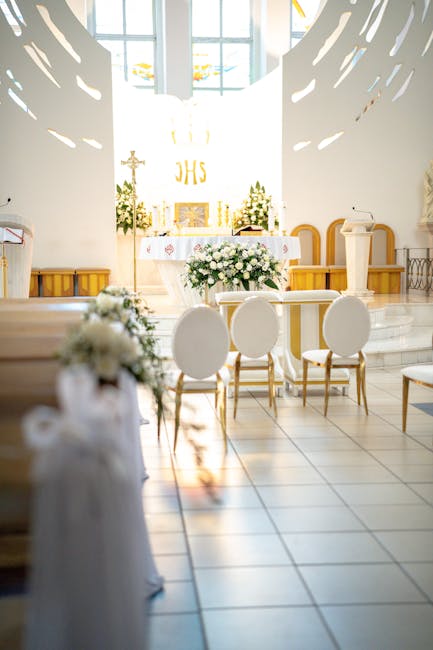
The transformation often depends less on "more flowers" and more on placement. For example, a modest church can feel far more elegant if the front aisle is balanced with two well-proportioned arrangements and the altar features a refined focal piece. No need to cram every corner. In fact, that usually looks worse. Less, but better placed, tends to win.
Seasonality also plays a role. Flowers chosen for early summer will feel different from winter stems, not only in colour but in texture and scent. A florist who understands that can create a look that suits the date rather than fighting against it. And yes, the room often smells different too-fresh, green, slightly sweet, and unmistakably wedding-day.
If you are choosing a wedding range, the local shop's wedding-focused pages can help with structure. For example, the weddings collection and the dedicated wedding flowers in Barkingside page are useful starting points when you want to see what is possible before narrowing the brief.
Key Benefits and Practical Advantages
A well-planned church floral transformation offers more than pretty pictures. It can genuinely improve the ceremony experience, especially in a venue where architectural details do a lot of the talking. Here are the main benefits worth paying attention to.
- Better visual balance - flowers help soften hard lines, stone walls, dark wood, or plain seating.
- Clearer focal point - the altar or front area becomes the natural centre of attention.
- More flattering photography - florals add depth, colour, and texture in the frame.
- Personal style without clutter - you can reflect the couple's taste without overwhelming the church.
- Stronger guest experience - guests walk into a space that feels considered, calm, and celebratory.
- Flexibility across budgets - the look can be achieved with full installations or a simpler, focused plan.
There is also a practical advantage that people sometimes overlook: flowers help define where the ceremony energy sits. They guide the eye. They frame the vows. They make the room feel like it belongs to the day, not just a building being borrowed for an hour.
To be fair, not every church needs a huge floral statement. Some venues already have stained glass, carved wood, candles, or stonework doing the heavy lifting. In those cases, the smartest design is often restrained, with careful colour selection and one or two well-placed arrangements. That restraint can feel more luxurious than a bigger display.
| Design approach | Best for | Typical effect | Watch out for |
|---|---|---|---|
| Minimal altar pieces | Small churches or ornate spaces | Elegant, calm, unobtrusive | Can disappear if colour choice is too pale |
| Balanced aisle and altar design | Most traditional church weddings | Structured and photogenic | Needs careful proportioning |
| Statement entrance or front display | Couples wanting visible impact | Strong first impression | May be too dominant in a tight space |
| Soft romantic scheme | Classic or pastel-themed weddings | Gentle, airy, intimate | Can look washed out in low light |
Who This Is For and When It Makes Sense
This kind of wedding floristry is ideal for couples getting married in a church who want the ceremony space to feel personal without losing its character. It is especially useful if the venue is already lovely but a bit plain, or if the architecture is strong and needs softening rather than competing with.
It also makes sense for:
- Couples planning from outside Barkingside who want local delivery and setup
- Families who are helping with the wedding budget and need a clear floral plan
- Brides and grooms comparing bouquets, buttonholes, and ceremony flowers together
- Planners who need one supplier to handle ceremony flowers efficiently
- Anyone wanting a clean before-and-after transformation rather than random decorative pieces
The case study approach is particularly helpful when the couple is torn between "simple and tasteful" and "full floral statement." That is a common wobble, honestly. Photos often show only the end result, not the trade-offs. A proper comparison helps you see what matters most for your own venue, not someone else's dream board.
If you are still exploring styles, browsing the bridal bouquet options and matching them with bridesmaid bouquets can help you understand the overall tone before you settle on larger ceremony pieces.
Step-by-Step Guidance
Planning a church wedding floral transformation works best when you treat it like a sequence, not a last-minute decoration job. Here is a sensible route.
- Walk the venue first. Look at the entrance, aisle width, altar area, windows, and any fixed features. Notice where the light falls. Morning light and late-afternoon light can make the same flowers read very differently.
- Decide the emotional tone. Do you want romantic, classic, modern, or softly traditional? This choice affects colour, shape, and flower density.
- Set the priority zones. You usually do not need flowers everywhere. Choose the places that people will actually see: entrance, front of church, aisle edges, and the bouquet moment.
- Match flowers to the building. Tall arrangements suit grander spaces. Lower, wider pieces often work better in smaller or more intimate churches.
- Review the ceremony timeline. Delivery windows matter. If there is a rehearsal, a morning setup, or a service before the wedding, plan for that early.
- Choose your personal flowers. Bridal bouquet, bridesmaid bouquets, buttonholes, and corsages should tie into the ceremony design rather than sit apart from it.
- Confirm installation and takedown. Who is responsible for placing flowers, moving them after the ceremony, and collecting stands or containers?
- Check final details in writing. You want clarity on colours, stem count if relevant, flower substitutions, and venue access. Saves bother later.
One very practical tip: ask for a design approach that includes both the ceremony view and the guest arrival view. A church can look beautiful from the front but feel sparse from the back pews. That little detail often gets missed.
And if you are ordering from a florist with a broad wedding range, it helps to look at related products too. The wedding buttonholes and wedding table arrangements pages are useful when you want the ceremony and reception to feel coordinated rather than pieced together on the day.
Expert Tips for Better Results
In our experience, the strongest church wedding floral designs are the ones that look effortless. They are not, of course, effortless to plan. There is usually a lot of quiet decision-making behind them. Here are a few things that make a real difference.
- Use repetition carefully. Repeat one or two flower types or colours across the bouquet, aisle, and altar so the whole wedding feels joined up.
- Think in layers. A design with foreground, mid-ground, and focal-point interest photographs better than a single isolated arrangement.
- Respect the building. Let the church architecture breathe. If the venue is already ornate, the flowers should complement it, not duke it out with the organ loft.
- Consider visibility from every angle. Guests do not all sit in the same line of sight.
- Choose sturdy mechanics. Church floors, steps, and altar areas need secure placement. Nothing ruins the mood like a wobbly stand. Bit of a mood killer, that.
- Keep weather in mind. If flowers are moving from car to church in warm or damp conditions, they need packaging and timing that protect freshness.
A softer tip, but an important one: do not let the whole design become a catalogue of trends. Trends come and go. Your photos, however, will stay. A classic structure with thoughtful colour usually ages far better than a hyper-specific style that feels dated in two years.
If you want to see how different tones and colour palettes translate into finished arrangements, the White Wonders wedding collection and Pure Romance wedding collection are useful comparisons because they show how different moods can shape the same kind of day.
Common Mistakes to Avoid
Most disappointing wedding flower results are not caused by bad flowers. They are caused by poor planning. The good news is that the mistakes are predictable, which means they are avoidable.
- Using too many focal points - if everything is shouting, nothing is.
- Ignoring scale - tiny arrangements in a large church can look lost; oversized pieces can crowd a small one.
- Choosing the wrong colour temperature - some tones look flat in church lighting, especially pale shades without contrast.
- Forgetting the aisle - all the attention goes to the altar, then the walk down the aisle feels unfinished.
- Not checking venue restrictions - some churches limit standing fixtures, adhesives, candle proximity, or placement on historic surfaces.
- Leaving personal flowers as an afterthought - bouquets and buttonholes should connect to the ceremony scheme.
- Ordering too late - seasonal flowers and wedding dates do not always line up neatly.
Another common issue is forgetting that photographs compress scale. Something that feels quite bold in the room may read smaller in images. If the flowers need to show up in photos, you may need a little more structure or contrast than you first think.
And yes, people do sometimes ask for "just a few flowers" and then later wonder why the church still feels bare. Happens more often than you would expect.
Tools, Resources and Recommendations
You do not need a mountain of kit to plan wedding floristry well, but a few tools and reference points help keep things organised. A florist, planner, or couple can use the following as a practical framework.
- Venue photographs - take wide shots of the ceremony space, entrance, and front area before making decisions.
- Measurement notes - approximate aisle width, altar height, table or ledge dimensions, and any steps.
- Colour reference board - even a simple phone album helps keep tones consistent.
- Guest flow plan - know where people enter, sit, and gather after the ceremony.
- Flower care guidance - useful if any arrangements need holding overnight or moving between locations. The site's flower care page is a practical reference for keeping blooms in good condition.
- Delivery and timing details - check what is possible on the morning of the wedding. The delivery information page can help you think through timing and handover.
If you are comparing styles, you may also want to look at the broader luxury flowers range for larger statement inspiration and the florist choice options if you are happy to let the designer select seasonal stems within your brief.
Useful recommendation, especially for church weddings: keep one folder with the venue layout, flower choices, order details, and contact numbers. It sounds obvious. Then wedding week arrives and people are suddenly juggling five messages, two lists, and one uncle asking where to park. A single folder saves your sanity.
Law, Compliance, Standards, or Best Practice
For wedding floristry in a church setting, the biggest compliance issue is usually not a law in the formal sense but venue-specific best practice. Churches often have their own rules about access, decoration methods, health and safety, and what can be attached to fixtures or placed near lit candles. Those instructions should always be followed.
Good practice normally includes:
- Checking permission before installation - especially for stands, arches, or anything touching fabric, walls, or historic surfaces.
- Protecting floors and aisles - avoid slipping hazards from moisture, loose petals, or unsecured containers.
- Planning safe transport - arrangements should be carried and placed in a way that avoids damage to blooms and venue interiors.
- Respecting the ceremony environment - flowers should support the service, not interfere with movement, visibility, or seating.
- Confirming waste and takedown responsibilities - who removes packaging, water, and any reusable stands after the event?
In the UK, it is sensible to think in terms of venue duty of care and common-sense safety rather than assuming every space accepts the same setup. Historic buildings can be especially particular, and for good reason. If in doubt, ask the officiant or venue contact early rather than on the morning itself. That avoids awkwardness, and awkward is rarely a wedding theme anyone wants.
Best practice also extends to sourcing. If sustainability matters to you, ask about seasonal stems, reusable mechanics, and packaging. The site's sustainability page can help frame those conversations in a practical way.
Options, Methods, or Comparison Table
There are a few common ways to approach church wedding floristry, and each one suits a different kind of ceremony. The right choice depends on the building, budget, and how dramatic you want the before-and-after shift to feel.
| Method | What it includes | Strengths | Limitations |
|---|---|---|---|
| Minimalist approach | Hand-tied bouquet, buttonholes, one or two focal arrangements | Affordable, elegant, easy to manage | Less visible in large churches |
| Balanced ceremony package | Bouquet, bridesmaid bouquets, buttonholes, altar pieces, aisle accents | Well-rounded, photogenic, flexible | Needs more coordination |
| Statement installation | Larger entrance features, fuller altar design, stronger colour story | High impact, memorable, dramatic | More expensive and venue-sensitive |
| Seasonal curated style | Flowers chosen around seasonal availability and natural tones | Fresh, cohesive, often better value | Requires trust in florist selection |
If you are torn between methods, ask one simple question: where do you want the visual emphasis to land? On the couple? On the altar? On the whole aisle journey? That answer usually sorts the decision very quickly.
Case Study or Real-World Example
Here is a realistic example of how a Barkingside church wedding floral transformation might be planned. Not a fantasy Pinterest scene. A proper, workable setup.
Before: the church has a beautiful structure but reads a little stark in photographs. The aisle is clear but visually empty. The front area has good architecture, though it needs softening so the couple does not look lost in the frame. Guests will be seated fairly close together, which means anything too large could feel intrusive.
After: the ceremony space is styled with a restrained but polished floral scheme. The bridal bouquet is the main focal flower piece, with bridesmaid bouquets in a matching tone so the colour story feels consistent. Buttonholes echo the bouquet shape. At the front of the church, two balanced arrangements frame the ceremony area without blocking sightlines. Aisle accents are kept light and neat, enough to create rhythm without making guests navigate a floral obstacle course.
The effect is immediate. On arrival, the church feels more welcoming. During the vows, the flowers frame the couple rather than distracting from them. In photographs, the altar now reads as a deliberate ceremony point instead of just "the front of the church." And importantly, the design still respects the building.
That is the heart of a good before-and-after case study. The flowers do not steal the scene. They give the scene shape.
If you want to build a similar look, the following wedding lines are especially relevant: The One wedding collection, Forever Yours wedding collection, and the Perfect Match bridal bouquet. They help set a coherent style before you drill down into the details.
Practical Checklist
Use this checklist to keep the planning grounded and simple. It is amazing how quickly wedding details drift without one.
- Have you checked the church layout and any decoration rules?
- Do you know where the flowers will be placed before the ceremony starts?
- Have you chosen a colour palette that suits the venue lighting?
- Are the bridal bouquet, bridesmaid bouquets, and buttonholes coordinated?
- Will the altar or front area need one focal piece or two balanced pieces?
- Have you confirmed delivery time and the person receiving the flowers?
- Do you know whether petals, stands, candles, or aisle markers are permitted?
- Have you asked what will happen to the flowers after the ceremony?
- Is there a backup plan if a chosen bloom is unavailable?
- Have you reviewed final details in writing, even if the plan feels obvious?
A quick little truth: most wedding stress comes from the gaps between assumptions. This checklist helps close those gaps.
Conclusion
A strong Wedding floristry case study Barkingside church before and after is really about more than decoration. It is about shaping a ceremony space so it feels calm, welcoming, and memorable from the first step inside. When the flowers are chosen with the building, lighting, and guest experience in mind, the result feels natural rather than forced.
That is the standard worth aiming for. Not "more flowers." Better flowers, better placement, better timing, better fit. The difference shows up in the photos, yes, but also in the atmosphere of the day itself. And let's face it, that atmosphere is what people carry home with them.
If you are planning a church wedding in Barkingside, take the time to look at the space properly, compare your options, and build a floral plan that supports the ceremony rather than crowding it. That thoughtful approach usually gives the best before-and-after transformation-quietly confident, graceful, and properly memorable.
Get a free quote today and see how much you can save.
Sometimes the best wedding details are the ones that feel as if they have always belonged there. That is a lovely thing to get right.
Frequently Asked Questions
What does a wedding floristry case study show?
It shows how the ceremony space looked before the flowers, what was changed, and how the final design affected the feel of the venue. A good case study helps you judge scale, colour, and placement, not just style.
Why is a before-and-after example useful for a church wedding?
Church spaces can be hard to visualise from a brochure or a mood board alone. A before-and-after example helps you see how flowers interact with architecture, lighting, and aisle layout in a real setting.
How far in advance should I plan church wedding flowers?
As early as you reasonably can. The earlier you plan, the easier it is to secure seasonal blooms, coordinate delivery, and confirm the venue's decoration rules. Leaving it late usually narrows your choices more than people expect.
What flowers work best for a Barkingside church wedding?
That depends on the season, your colour palette, and the style of the church. Roses, lilies, lisianthus, orchids, and mixed seasonal arrangements are common choices because they can be styled in both classic and modern ways.
Do church wedding flowers have to be large to look good?
No. In many churches, smaller but better-placed arrangements work better than huge displays. Scale matters, but so does proportion. A balanced design often looks more elegant than something oversized.
Can I reuse ceremony flowers at the reception?
Often, yes. Many couples move altar arrangements or aisle flowers to the reception after the ceremony. You just need a clear plan for transport, timing, and who is responsible for moving them.
What should I ask the church before ordering flowers?
Ask about access times, decoration restrictions, whether candles or stands are allowed, and what needs removing afterwards. These small questions prevent a lot of day-of stress.
How do I make a modest church look more romantic with flowers?
Use a consistent colour palette, choose softer shapes, and place arrangements where they naturally frame the ceremony. You do not need to cover every surface. A few thoughtful focal points usually do the trick.
Are white flowers always the safest choice for church weddings?
White is classic, but not always the best choice on its own. In some lighting it can look flat. Adding cream, blush, green, or a deeper accent can give the design more depth and help it read better in photos.
What is the biggest mistake couples make with wedding floristry?
Trying to make the flowers do everything at once. Good wedding floristry has a clear job: frame the ceremony, suit the venue, and support the mood. Once you know the job, the design gets much easier.
Can I order wedding flowers online for a church ceremony?
Yes, provided the florist offers a suitable wedding range and clear delivery arrangements. It helps to choose a supplier with specific wedding products so you can match bouquets, buttonholes, and venue arrangements properly.
How do I keep church flowers fresh on the day?
Keep them cool, handled carefully, and delivered as close to the ceremony time as possible. Good flower care, sensible transport, and clear setup timing make a big difference, especially in warmer months.


